When couples arrive in my office and say, “We can’t talk without it turning into a fight,” I usually hear the same trio of culprits underneath: misread intent, unmanaged arousal in the body, and old stories that grab the wheel the moment something feels risky. Defensiveness is not just a bad habit, it is a nervous system strategy. It protects against shame, blame, and the fear of losing connection. The work is not to shame the shield, but to help partners speak in ways that don’t require a shield in the first place.
This piece offers scripts I have tested across hundreds of sessions, along with the context that helps them land. Scripts are not magic, but they are scaffolding that keeps a hard conversation from collapsing. They also invite each partner to practice micro-doses of vulnerability while still feeling safe. Used consistently for a few weeks, most couples report fewer escalations, shorter repairs, and a sense that they can finally get traction.
Why defensiveness spikes so fast
Defensiveness usually enters a conversation for one of four reasons. First, a partner hears criticism rather than a need. “You never text me back” reads as a verdict, not a bid for connection. Second, body arousal runs ahead of words. Heart rate climbs past 100 beats per minute and nuance evaporates. Third, trauma history colors the present. A raised eyebrow can read like danger if you grew up scanning faces for safety. Fourth, neurodivergent processing styles can create mismatch. One partner needs time and clarity, the other fires questions. Neither is wrong, but the cycle turns tense.
These factors are not character flaws. They are predictable, measurable patterns. In trauma therapy, we map how the nervous system anticipates threat. In EMDR therapy, we reprocess those old moments so current disagreements stop dragging in the past. In couples therapy, we design small behavior changes that let both partners feel safer in real time. For neurodivergent therapy, we add structure and flexibility to honor different brains. The goal here is not zero conflict. The goal is a way of talking that does not turn every difference into a referendum on love.
Ground rules that make the scripts work
If you have ever tried a script and felt silly or stilted, you are not alone. The first dozen tries often feel like reading a map while driving uphill. That is fine. To reduce defensiveness, a few conditions matter more than elegance.
Pacing matters. You cannot outtalk a racing heart. If either person notices fists clenching, voice tightening, or tunnel vision, pause for 90 seconds with feet flat on the floor and eyes on something neutral in the room. Sip water. Then resume, slower.
Ownership matters. Scripts collapse if you use them as weapons. “I feel like you are a jerk” is not an I-statement. Own your experience, not your partner’s motives.
Specificity matters. “You always” and “you never” rarely fit reality. Aim for time, place, and behavior. The more concrete the example, the less your partner has to defend a global attack.
Timing matters. Starting a high-stakes script at 11:30 p.m. When the day has wrung you out will not help. Build a window with enough fuel to stay present.
A quick setup both partners can agree to
Before you use any script below, shrink the task. Pick one topic that is small enough to finish in 15 minutes. If the issue is big - say, a long-standing money conflict - pick one narrow slice like, “How we talk about the monthly grocery budget.” Agree on a signal for timeouts, something as simple as placing a hand over your heart. Decide who will go first. Agree that if either person says, “Can we try the script?” you both will follow the structure for at least one full round.
Here is a short checklist I often hand couples before we start.
- Choose one topic that can be discussed in 10 to 20 minutes. Set a timer for 12 minutes, then allow a second 12-minute round if needed. Keep phones out of reach and notifications off. Have water nearby and a pen to jot two words if you fear forgetting a point. Decide in advance what to do if either person becomes flooded - for example, a 5-minute break with a set return time.
Script 1: The soft start for hard feedback
Use this when you need to raise a concern and want to minimize a reflexive “That’s not true” response. It is a soft-start model that layers context, observation, impact, and a small, workable ask. The sequence protects dignity on both sides.
Speaker A: “I want to talk about something small that matters to me. Is now okay for a 12-minute chat?”
(If consent is given)
“Context: I know we have both had long days. I also know you do a lot around the house, and I appreciate the dinners you have cooked this week.
Observation: Yesterday, when the packages came, they sat in the hallway until this morning.
Impact: Walking past them a few times added to my sense of clutter and stress.
Ask: Could we agree to open or move packages to the office within the same day, even if they are not put away yet?”
Speaker B: “Thanks for bringing it up this way. I can hear that the hallway clutter spiked your stress. I can agree to move packages to the office on the same day. Can I add a constraint? On evenings when I have the late shift, I might not get to it until the next morning.”
Speaker A: “That works for me as long as it is occasional. If it is more than twice a week, I will check in again.”
Notes from the chair: The opener sets scope and signals goodwill. A short affirmation before the ask lubricates the moment. The observation stays behavioral. Impact keeps it personal rather than moral. The ask is specific, measurable, and small. As the listening partner, lead with an understanding paraphrase before adding logistics. This alone reduces defensiveness by preempting the fear of being painted as inconsiderate.
Script 2: The “pause and play” when you feel attacked
Use this when you are on the receiving end of what sounds like criticism and your body starts to armor up. This script interrupts the rapid-fire exchange, names your internal state, and asks for a clearer frame. It is not a debate move; it is a regulation move.

Speaker B: “I want to hear you, and I am noticing my chest tighten. Could I ask you to restate that as a specific request for the future rather than a judgment about the past?”
Speaker A: “Okay. For the future, when you are running late, could you text me an ETA as soon as you know you will be late, even if it is just a quick ‘arriving 6:50’?”
Speaker B: “Thank you. I can do that. Hearing it as a request helps my brain stay with you.”
Notes from the chair: This move often feels strange at first. You are interrupting the flow to change the grammatical shape of the message. But it works, quickly, because it trades global blame for a concrete plan. If your partner is upset and cannot switch, you can still restate their complaint as a need: “I am hearing that you want more timely updates when my schedule shifts. Did I get that right?”
Script 3: The two-sentence repair when voices rise
During sessions, I measure how quickly a couple can exit escalation. One of the simplest exits is a two-sentence repair. Keep it under 15 seconds.
Speaker A: “I do not want to keep ratcheting this up. Let me try again more gently.”
Short pause. Slower voice.
“What I am trying to say is that I miss talking with you in the evening, and I feel lonely when we sit with separate screens.”
Speaker B: “Thank you for saying it that way. I can put my phone in the kitchen after 8 tonight and see how that feels for both of us.”
Notes from the chair: Repair is not apology theater. It is a shared decision to re-enter connection. The key is tone shift first, content second. The brain tracks prosody as threat or safety. When tone softens, defensiveness reduces before logic has a chance to speak.
Script 4: The “translation” for mixed processing speeds
Many couples include one partner who speaks to think and another who thinks to speak. Add ADHD or https://www.fuzzysockstherapy.com/neurodivergent-therapy autism, and differences in timing, literal language, and sensory load can amplify misunderstandings. This script respects pace and clarity.
Speaker A: “I have three points. I will share the headline for each, then pause so you can reflect, and then I will fill in one detail. First headline: I need more clarity on our Sunday plan.”
Pause 10 seconds.
“One detail: By Friday night, can we agree on the time we will leave and who is driving?”
Second headline after another pause: “I would like a budget check-in this weekend.”
Pause 10 seconds.
“One detail: Let’s look at the credit card together for 15 minutes on Saturday morning.”
Speaker B: “Thank you for headlines and pauses. I will answer each. Sunday plan: yes, let’s decide by Friday at 7 p.m., and I will drive. Budget check-in: yes, 10:30 a.m. Saturday for 15 minutes works.”
Notes from the chair: For neurodivergent therapy, we normalize and build around the brain’s strengths. Headlines reduce working memory load. Pauses reduce pressure and give time for internal organization. Many defensive spirals in these couples are actually timing mismatches mislabeled as indifference.
Script 5: The “temperature check” for sensitive topics
When trauma history sits in the room, certain topics carry heat: finances, sex, extended family, parenting. You reduce defensiveness by naming the heat and co-designing the level of exposure. This script is short and respectful of the body.
Speaker A: “This topic feels loaded for me. On a scale of 1 to 10, I am at a 6 already. Could we start with a 10-minute version of it, and can you talk at a 4 out of 10 intensity?”
Speaker B: “I hear the 6. Yes, 10 minutes, and I will keep my volume and speed at a 4. I will also check in at the 5-minute mark.”
After 5 minutes:
Speaker B: “Quick check. I am keeping it at a 4. Where are you now on the 1 to 10 scale?”
Speaker A: “I am at a 5 now. Let’s keep going for the remaining 5 minutes.”
Notes from the chair: This is a micro-dose approach borrowed from trauma therapy and exposure science. You are not avoiding the content. You are titrating it. Partners who have done EMDR therapy often find this easier because they recognize the usefulness of rating scales for staying within a workable window. The scale makes it clear when to slow down or pause, reducing the need for defensive pushback.
Script 6: The “two truths” for binary stalemates
Defensiveness spikes when a conversation has room for only one story. The two-truths frame allows both perspectives to sit side by side without collapse.
Speaker A: “My truth is that when you travel for work three weeks in a row, I feel abandoned. I know you do not mean it that way, and I still feel it.”
Speaker B: “My truth is that when I travel, I feel pressure to succeed for our family. I worry that cutting back will hurt us long term. I know you do not mean to add pressure when you ask me to cancel trips, and I still feel it.”
Speaker A: “Both truths matter. Can we look for a solution that respects both - like shifting one trip this quarter or adding a video call every other night for 20 minutes that is just us, not logistics?”
Speaker B: “Yes. I can cancel the mid-month trip and protect the video time on my calendar.”
Notes from the chair: The phrase “both truths matter” is a pressure release valve. It tells the nervous system there is no courtroom here. Solutions get creative once the debate posture loosens.
Script 7: The parenting pivot without shaming
Many couples hit defensiveness walls around parenting, especially under stress. If you have children with sensory needs or ADHD, or if you are navigating child therapy, you may disagree on approaches. This script pivots from critique to co-parent alignment.
Speaker A: “When you raised your voice at bedtime, I saw our son startle. I felt a pang in my stomach. I do not want to pile on you. Could we talk for 10 minutes about bedtime tone and what would help both of us?”
Speaker B: “Yes. I was fried from the day. I am not proud of my tone. I am open to ideas.”
Speaker A: “Thank you. I want us to be on the same team. One idea is a handoff at 7:45 so the person with more patience takes the final stretch. Another is we agree to whisper after 8 p.m. So the volume stays low by default.”
Speaker B: “The handoff helps. Let’s try whispering after 8 p.m. For a week and see if our son settles faster.”
Notes from the chair: Good parenting plans are specific and kind to the adults, not just the child. Shame fuels defensiveness and leaks into the next night’s routine. If a child is in therapy, ask the therapist for two-sentence scripts that match the child’s plan so both parents use the same language.
Micro-skills inside the scripts that lower shields
Even a polished script will backfire without the micro-moves that make your partner’s body feel safe. The research term is “safety cues,” but most of us recognize them from lived experience. Your face, your tone, the way you arrange your hands on your knees - they all speak. Two skills in particular change outcomes.
First, lead with a brief gratitude or acknowledgment when raising a complaint. It should be genuine and specific, not a formula. “Thank you for handling the dentist appointment,” buys a lot of slack for, “I still need more lead time on calendar changes.”
Second, name your own state in real time without blaming. “I want to keep going, and I feel my shoulders tense,” is an invitation to slow down, not a backhand at your partner. If you grew up in a house where naming feelings was not safe, this may feel odd. It gets easier. I have watched ex-military clients, engineers, and retail managers alike turn this into their superpower.
How to adapt scripts when trauma is part of the picture
If you carry trauma, even light criticism can feel like a trapdoor. Defensiveness keeps you from falling. In that case, up-front agreements matter. For instance, no raised voices, ever, during hard topics. Feet planted on the floor. No blocking doorways. No sudden movements toward the other person. It sounds basic because it is. The body notices.
If you are in EMDR therapy, share with your clinician that couple conversations still trigger you. You can install a calm image and a felt sense of a safe place that you call up before a planned talk. You can also target specific couple arguments as past events if they feel sticky. I have watched partners do EMDR separately, then return to the same disagreement and discover they can hear each other without their body bracing. When the body stops predicting doom, defensiveness drops.
If your partner carries trauma, the person speaking should match their pace. Shorter sentences. Longer pauses. Offer choices. “Would you like to keep talking for five minutes or take a brief break and return?” Choices signal control, which calms the alarm system.
When one or both partners are neurodivergent
Neurodivergent therapy often blends skill-building with environment design. Scripts work better when they respect sensory limits and executive function. That can mean scheduling the talk earlier in the day, dimming harsh lights, or allowing movement. Fidget tools help some adults listen without interrupting because a part of their attention can discharge energy. If one partner is literal and the other speaks in metaphor, practice translation. “When I say ‘I am drowning in chores,’ what I mean is I have ten undone tasks. Could you help with the dishwasher and trash by 8 p.m.?”
Working memory differences also matter. If your partner forgets mid-conversation agreements, it is not disrespect. It is a brain thing. Keep a shared note titled “Agreements” with dates. After a script, write one sentence. “Packages moved to office same day.” This prevents the 30th iteration of “We already decided that,” which is gasoline on defensiveness.
Handling misfires and edge cases
Even with careful use, scripts sometimes flop. One partner might say, “This is robotic,” or “You are just reading a line.” Here is what I suggest you do in that moment. Name the awkwardness, but return to the aim.
Speaker A: “It does feel stiff. I am using this script because I want to stay on your side while we figure this out. I care more about staying connected than sounding smooth. Would you be willing to try one more round?”
Most partners will say yes if the motivation is clear. If the answer is no, ask when a retry would feel better. If the answer is still no, shift the goal from resolution to goodwill. “I hear that now is not right. I appreciate your honesty. I am going to take a walk and we can pick this up tomorrow morning for 12 minutes.”
In high-conflict pairs, the misfire might be sarcasm or eye-rolling. Do not match it. Protect the process. “I want to keep this respectful. If sarcasm pops up, I am going to pause for one minute and then try again.” Then do exactly that, kindly. It is not a power move; it is a guardrail.
How to repair after a defensive blowup
If it still goes sideways - raised voices, stonewalling, a slammed door - aim for a simple repair within 24 hours. You do not need to solve the original issue before you reconnect. You just need to restore safety so the next talk has a chance.
Here is a compact repair sequence I hand to couples as a weekend exercise.
- State your intention in one sentence: “I want to repair how we talked last night.” Own one specific behavior: “I interrupted you three times.” Validate one impact: “That likely made you feel dismissed.” Offer one concrete change for next time: “I will keep a note card to jot points so I can wait.” Make one small bid for connection: “Would you like to walk around the block with me later?”
This five-step repair keeps each piece short and prevents a second fight about who was worse. Over time, the distance between rupture and repair shrinks, which is one of the best predictors of durable couples.
Bringing the scripts into daily life
You do not need a weekly therapy appointment to practice. Try one script in one context for one week. For example, the soft start during kitchen clean up every evening. Or the pause-and-play the next time your partner’s tone spikes. Teach the translation script to your teenager while you are at it. Most adolescents respond better to headlines and choices than to monologues, and the same timing rules apply. That cross-training helps the whole family ecosystem regulate, not just the couple.
If you are already in couples therapy, bring these scripts to your sessions. Ask your therapist to coach your delivery and timing. In trauma therapy, share which parts of the scripts are hardest on your body so you can build tolerance without white-knuckling it. If your child is in therapy, ask their clinician to suggest two-sentence parent scripts for transitions and frustrations. The more your home culture shares language, the fewer defensive spirals you will see.
A brief case vignette
Two clients, mid-30s, no kids, both in demanding jobs. She processes fast and prefers direct talk. He grew up in a critical home and shuts down when he hears judgment. They arrive at session after a week of fights about chores. We run Script 1. She opens with context and a concrete ask about the trash going out before 8 p.m. He reflects impact before negotiating constraints. The first exchange takes four minutes, no fireworks. In the second round, he raises a concern about weekend plans using the same structure. She mirrors him. By the third session, they add the two-sentence repair and a 12-minute cap. At week six, both report that disagreements now last 10 to 15 minutes, happen twice a week instead of daily, and almost never include raised voices. Neither partner feels like a villain. Defensiveness has not vanished, but it no longer runs the show.
When to seek more support
If your arguments include threats, insults aimed at core identity, or patterns of control, scripts are not enough. Safety plans and, in some cases, individual therapy need to come first. If dissociation or panic interrupts conversations, loop in your trauma therapist before pushing exposure. EMDR can lower reactivity, but it should be paced. If neurodivergent traits make traditional talk hard, ask for adaptations: written exchanges ahead of time, visual agendas, or movement breaks built into the session.
For most couples, though, these small scaffolds change the air quickly. You do not have to be eloquent. You just have to be willing to trade reflex for structure a few minutes at a time.
A closing note on practice
One of the quiet truths about defensiveness is that it often softens when someone feels seen in their effort. If your partner stumbles through a script, notice the effort, not the flaws. “Thank you for trying that” has more power than it sounds. Ten such exchanges in two weeks often rewires the expectation that talks are dangerous. And once the expectation shifts, both of you start talking more like allies than adversaries.
The scripts here are starting points. Adjust words to fit your voice. Keep the bones: consent to talk, specifics over global claims, pacing that respects bodies, and requests that a real person can actually do on a Tuesday. That is the kind of communication that makes defensiveness unnecessary, not by scolding it into silence, but by giving it nothing to guard against.
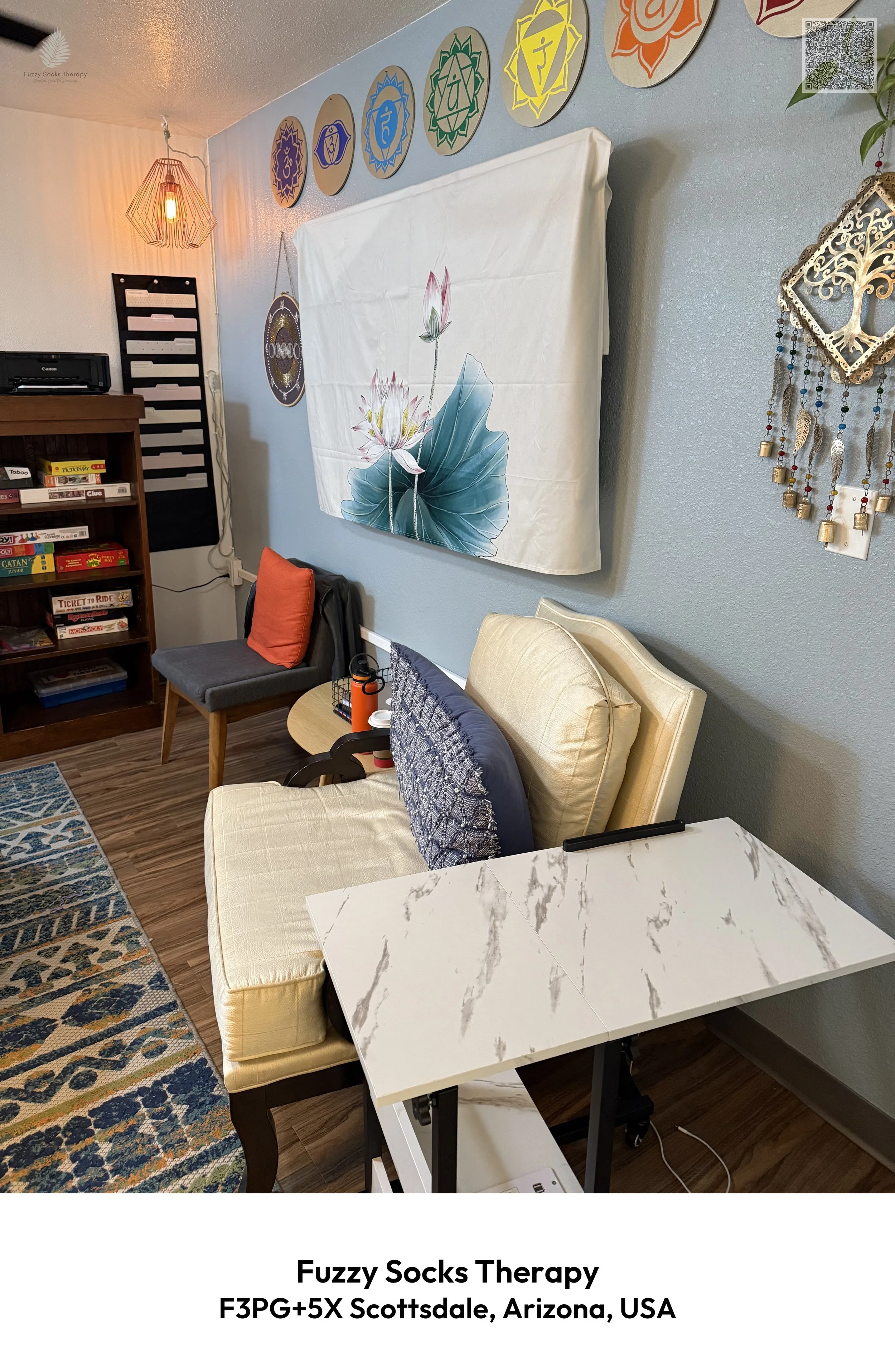
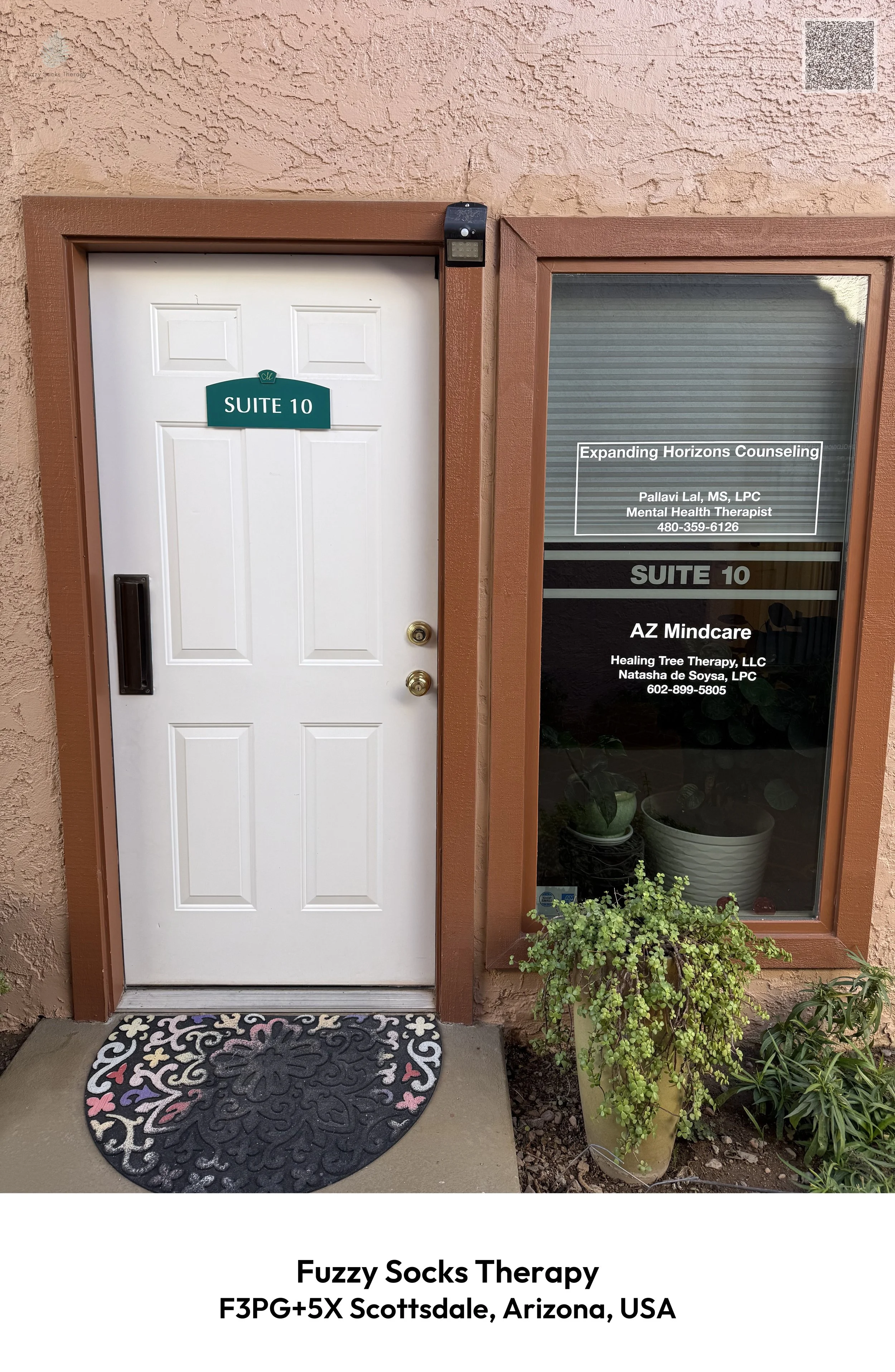
Address: 3295 N. Drinkwater Blvd., Suite 10, Scottsdale, AZ 85251
Phone: (720) 378-8454
Website: https://www.fuzzysockstherapy.com/
Email: [email protected]
Hours:
Monday: 9:00 AM - 5:00 PM
Tuesday: 9:00 AM - 5:00 PM
Wednesday: 9:00 AM - 5:00 PM
Thursday: 9:00 AM - 5:00 PM
Friday: 9:00 AM - 5:00 PM
Saturday: Closed
Sunday: Closed
Open-location code (plus code): F3PG+5X Scottsdale, Arizona, USA
Map/listing URL: https://maps.app.goo.gl/cqhwvXU4UMg6QL1YA
Embed iframe:
The practice offers in-person therapy in Scottsdale along with online sessions for clients in Arizona, Colorado, and Florida.
Clients can explore services such as trauma therapy, EMDR therapy, Deep Brain Reorienting Therapy, neurodivergent therapy, child therapy, couples therapy, discernment counseling, and parenting intensives.
Fuzzy Socks Therapy is especially relevant for people navigating trauma, dysfunctional family dynamics, ADHD, autism, relationship conflict, and emotional overwhelm.
The website presents a direct, practical therapy style focused on real tools and meaningful change rather than vague advice.
Scottsdale clients looking for trauma-informed psychotherapy can find support that combines deeper healing work with concrete skill building.
The practice also offers help for adult children of dysfunctional families, couples on the brink, and neurodivergent kids, teens, and adults.
To get started, call (720) 378-8454 or visit https://www.fuzzysockstherapy.com/ to book a free consultation.
A public Google Maps listing is also available for Scottsdale location reference alongside the official website.
Popular Questions About Fuzzy Socks Therapy
What does Fuzzy Socks Therapy help with?
Fuzzy Socks Therapy helps with trauma, dysfunctional family patterns, neurodivergence, relationship conflict, emotional overwhelm, and related challenges for individuals, couples, and families.
Is Fuzzy Socks Therapy located in Scottsdale, AZ?
Yes. The official website lists the office at 3295 N. Drinkwater Blvd., Suite 10, Scottsdale, AZ 85251.
Does Fuzzy Socks Therapy offer in-person and online sessions?
Yes. The official site says the practice offers in-person therapy in Scottsdale and online therapy in Arizona, Colorado, and Florida.
What therapy approaches are listed on the website?
The website highlights EMDR therapy, Deep Brain Reorienting Therapy, discernment counseling, play therapy, Dialectical Behavior Therapy, Emotionally Focused Therapy, and practical trauma-informed skill building.
Who provides therapy at Fuzzy Socks Therapy?
The official website identifies the therapist as Lianna Purjes.
Does the practice offer couples counseling?
Yes. The website includes couples therapy, couples intensives, and discernment counseling for couples deciding whether to stay together or separate.
Does the practice work with children and adolescents?
Yes. The site says the practice offers child therapy and support for children, adolescents, and their families.
How can I contact Fuzzy Socks Therapy?
Phone: (720) 378-8454
Email: [email protected]
Website: https://www.fuzzysockstherapy.com/
Landmarks Near Scottsdale, AZ
Drinkwater Boulevard is the clearest local reference point for this office and helps nearby clients place the practice in Scottsdale. Visit https://www.fuzzysockstherapy.com/ for service details.
Old Town Scottsdale is a familiar city landmark and a practical reference for people searching for therapy near central Scottsdale. Call (720) 378-8454 to learn more.
Scottsdale Civic Center is another recognizable local landmark that helps define the surrounding area for nearby professional services. The official website has current contact details.
Scottsdale Stadium is a well-known destination in the city and a useful point of reference for local users. Fuzzy Socks Therapy offers both in-person and online sessions.
Indian School Road is a major corridor that helps many residents orient themselves in Scottsdale. More information is available at https://www.fuzzysockstherapy.com/.
Fashion Square and the surrounding central Scottsdale area are widely recognized by local residents and visitors alike. Reach out through the website to book a free consultation.
Downtown Scottsdale is a strong local search reference for people seeking counseling and psychotherapy services in the area. The practice serves Scottsdale in person and multiple states online.
Scottsdale Road is another major route that helps define the broader service area for clients traveling from nearby neighborhoods. The practice supports individuals, couples, and families.
The Scottsdale arts and civic district is a useful area reference for those familiar with the city center. Visit the site to review specialties and next steps.
Central Scottsdale commuter corridors make this practice relevant for nearby residents who want in-person therapy, while online sessions add flexibility for clients in Arizona, Colorado, and Florida.